









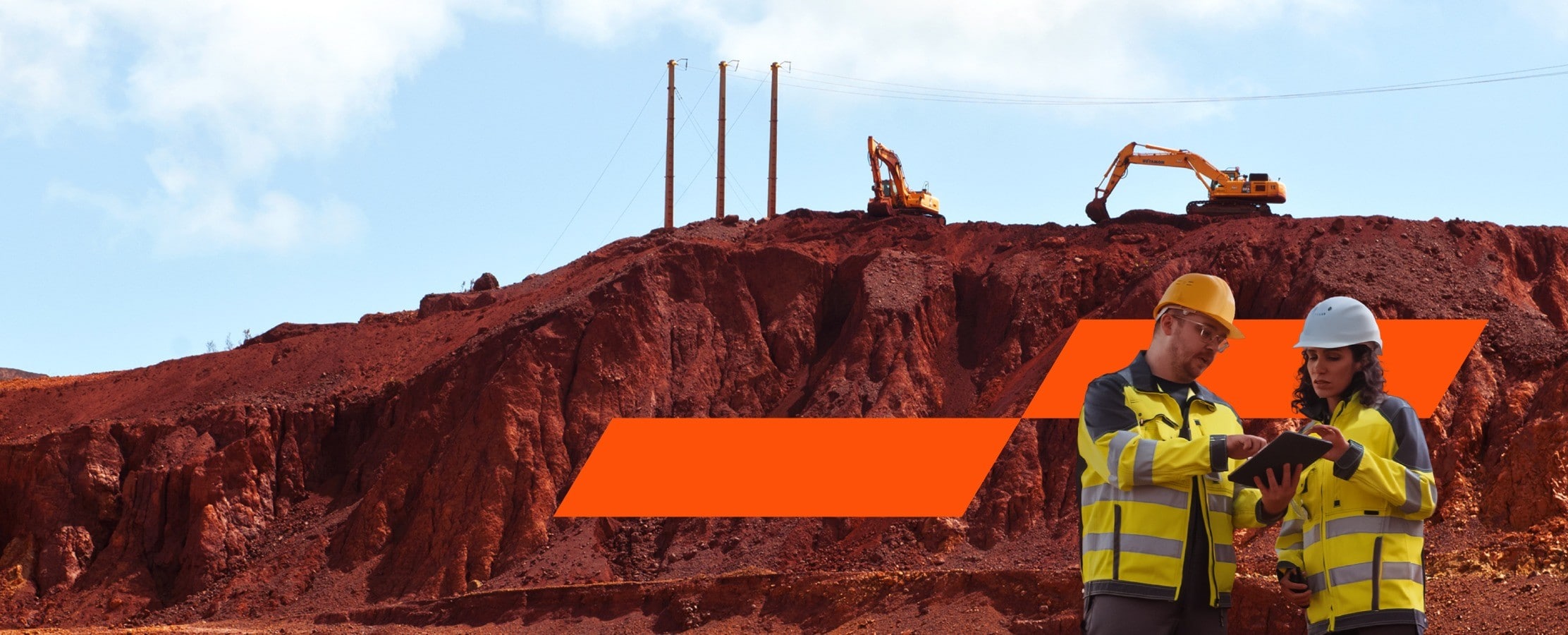
Aussie Mine is our analysis of Australia’s top 50 mid-tier miners, the MT50
In the past year, a series of fast-moving political and economic shifts have swept the world – and they show no signs of slowing. The Australian mining sector is not immune and has been influenced by many forces including:
- artificial intelligence (AI)
- a new US President taking office and pursuing an ‘America First’ agenda
- mounting demand for low-cost reliable energy
- stifled productivity growth in Australia
- a shifting trade, geopolitical and defence dynamic
This pace of change will be reflected in our approach to Aussie Mine going forward, our annual analysis of Australia’s mid-tier 50 miners (MT50) that has spanned 20 years. This historical data provides a perspective, but does not tell the full story of such a dynamic and rapidly changing world and industry.
In times of such uncertainty, gold has always shone and so it proved in 2025. Gold prices surged and breached the US$4,2001 mark for the first time in October 2025. But volatility has crept in.
Whereas the energy transition was historically the key driver in the demand for critical minerals, the landscape has changed dramatically. Supply chain security and defence priorities of nations are an increasing force. Government actions including direct investment, price floors, local investment incentives and mineral reserves are announced almost daily.
This year’s Aussie Mine asks some burning questions that will be further explored in our Series. The answers to those questions will be critical as to whether we, as an Australian mining industry, make the most of Our Time to Shine.
1 Gold Price.org/Gold Spot Price - https://goldprice.org/spot-gold.html
Highlights
Answering this years’ burning questions
How has Australia’s Critical Mineral Investable Universe changed?
Material investment in critical mineral projects has not yet emerged, despite surging demand for defence supply chains and the global pursuit of net zero through renewable energy. The ‘Investable Universe’ (i.e. Australian projects which are considered attractive by commercial investors) has only increased by a net seven projects since last year. The mix of minerals that make up these projects remains dominated by copper, nickel & lithium.
What role does government intervention play in critical mineral investment?
To secure minerals for defence and economic resilience, it’s quite common for government to intervene and influence supply and demand (e.g. through price mechanisms, direct investment, regulatory levers, strategic stockpiling, etc).
However, the current geopolitical and economic conditions are prompting governments to adopt ‘state-first’ postures and take extra measures to secure supply chains.
Of course, steps like these can have unintended consequences too. Australia’s miners should therefore think carefully about how government interventions may impact them. The mining industry has a big part to play in shaping policies and interventions targeted at securing the supply of critical minerals.

Are we bringing mining stakeholders together?
As we’ve said in previous Aussie Mine reports, meeting future critical minerals demand requires investment and scale. And those can only happen when there is sustained alignment of company strategies, financial markets, governments, customers and communities.
This year’s geopolitical and economic uncertainty has complicated efforts to achieve such alignment. There were only two notable critical minerals transactions (totalling $3.8bn for the Alumina Limited acquisition and $0.59bn for the Latin Resources acquisition, including its flagship Salinas Lithium project).
Instead, MT50 deals volume has been dominated by gold. This includes $12.4 billion in deals relating to gold company mergers, including Northern Star Resources’ acquisition of De Grey Mining for $5 billion.
Mergers & Acquisitions are being pursued to consolidate and optimise gold mining asset portfolios to build economies of scale and volume for when high prices ultimately recede.
The long-term success of these larger gold producers will depend on the realisation of synergies and cost reduction targets through well managed and executed post-integration projects.

How can mining operators maximise AI and boost Australia’s productivity?
The AI buzz is now deafening, with management teams feeling the pressure from their boards and competitors to ‘use AI’ and to deliver fast returns. But the real opportunity is to pinpoint where AI will create maximum value (and potentially competitive advantage) pending company maturity. This requires a genuine shift in thinking (more like a tech startup than a traditional mining company).
Early-stage miners have the advantage of starting from a zero base – they can ‘try, fail and learn’ fast.
To reap the full benefits of AI, mining companies need clarity on their long-term strategic objectives. They can then assess where AI can help them achieve those objectives faster, more accurately, and more efficiently (‘strategy-back’, not ‘AI-forward’). Remarkable results are possible when leaders have a clear view of strategic business priorities, data and technology feasibility, and the people who will use technology.
How are miners aligning climate and business outcomes to create value?
Australia’s move to mandatory sustainability reporting is approaching a major milestone with Group 1 disclosures expected to be published in early 2026. This milestone is an opportunity to align climate and business outcomes. Now is the time to quantify how investment in on‑site renewables and batteries can add value, while also hedging energy volatility and rising carbon costs under the Safeguard Mechanism.

Aussie Mine 2025
Download the report
Contact the team
Contact us for a detailed breakdown of the report or any enquiries.
Contact us

Kerryl Bradshaw
Partner, Energy, Utilities and Resources Industry Leader, PwC Australia