









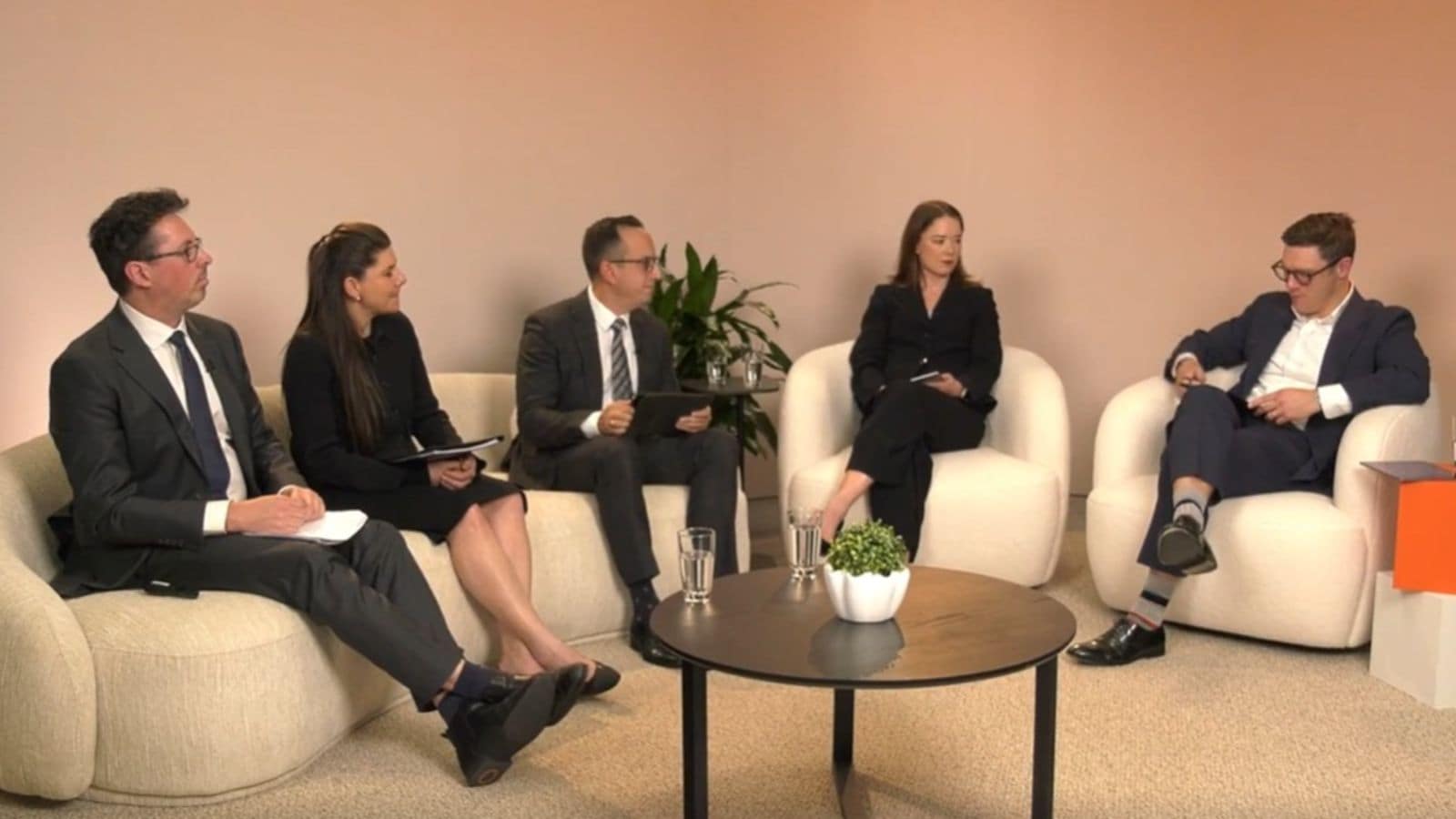
The October edition of PWC Tax Briefing series unpacked the Australian Taxation Office's (ATO) 2026 Top 100 and Top 1,000 reviews findings reports. In the tenth year of the justified trust programs, the clear message for large businesses was that assurance outcomes have improved significantly, governance must now be proven in practice, and contemporaneous evidence is what separates medium from high assurance.
Host James Wiley, Partner, Transfer Pricing was joined by Michelle Sams, ATO Acting Deputy Commissioner, Public Groups - Programs and Strategies, and Adam Pritchard, ATO Assistant Commissioner, Public Groups - Top 1,000 program, ATO, alongside PwC’s Jason Karametos, National Corporate and International Tax Leader, and Emily McKeith, Partner, Tax Controversy.
Key takeaways
- Stage 2 tax governance is now the norm; independent testing of controls (Stage 3) is the next differentiator.
- Evidence, not narrative, is what moves a taxpayer from medium to high assurance.
- High assurance should deliver a lighter-touch compliance dividend, but it is not permanent or a shield against audit.
- Transfer pricing and cross-border arrangements will dominate the ATO's 2027 large market risk agenda.
How have Top 100 and Top 1,000 assurance outcomes changed in 2026?
The ATO reported strong results across both programs. In the Top 100, 82% of taxpayers have medium or high income tax assurance, including 62% at high - up from just 6% at high in 2019. In the Top 1,000, 89% have medium or high income tax assurance, around one third are at high and 11% are at low. GST outcomes are stronger still, with 98% of the Top 100 and 95% of the Top 1,000 at medium or high assurance.
A low assurance rating is not permanent. Around 85% of Top 1,000 taxpayers previously rated low assurance improved on subsequent review, typically by implementing ATO recommendations or resolving issues through later compliance activity.
Read more about the 2026 findings reports in PwC’s Tax Alert.
Tax governance: from having a framework to proving it works
Tax governance was the strongest recurring theme of the session. Around 75% of the Top 100 now have at least Stage 2 income tax governance, and roughly half have independently tested their controls and demonstrated operating effectiveness. In the Top 1,000, 52% are at Stage 2, 39% at Stage 1 and 7% at Stage 3. With Stage 2 effectively the norm, independent testing of operating effectiveness is the next frontier. The ATO was clear that a documented governance framework is not enough on its own - taxpayers need objective evidence that the framework operates in practice.
How to be ready for an ATO assurance review
PwC observed that the best tax functions do not prepare for assurance reviews - they run the tax function so that it is review-ready on any day. In practice, leading tax teams:
- undertake post-lodgment reviews to confirm the tax return, financial statements and reportable tax position (RTP) schedule tell a consistent story
- build transaction files as material transactions occur, including agreements, commercial rationale, calculations and supporting analysis
- test that their governance framework is actually followed, rather than simply documenting controls
- engage with the ATO at the start of a review to understand information requests, discuss scope and agree sensible timelines.
Early engagement on significant transactions
For Top 100 taxpayers, the ATO wants real-time engagement on significant transactions and does not expect every fact to be settled before an approach. A useful early disclosure outlines the commercial objectives, the likely structure, the aspects still developing and the expected tax consequences. The ATO can then indicate whether it sees the transaction as routine or potentially problematic, and what evidence it will expect when it later seeks assurance - providing certainty over the likely compliance approach, if not formal tax certainty. For the more retrospective Top 1,000 program, the practical equivalent is to anticipate the issues the ATO is likely to examine and build the evidence file contemporaneously.
What compliance dividend does high assurance deliver?
The ATO incated that high assurance taxpayers should increasingly see narrower requests for information, fewer years and issues reviewed, reliance on previous assurance work, faster reviews, monitoring in place of repeated full reviews and greater reliance on taxpayers' own control testing. For the Top 100, the ATO referred to monitoring and maintenance periods of up to three years. PwC's panellists offered a more measured view: the dividend exists, but taxpayers do not always feel it consistently given the accumulation of other compliance obligations. The ATO acknowledged this tension, noting that a refresh review should top up the existing evidence base rather than start again.
High assurance is not set and forget. The ATO has downgraded taxpayers where governance commitments were not implemented, controls deteriorated, the business changed materially or significant new transactions altered the risk profile. Material transactions effectively require their own assurance, even for a taxpayer that is highly assured overall.
Disputes, penalties and the end of independent review
PwC and the ATO agreed that a taxpayer can maintain a firm, technically well-supported position contrary to the Commissioner's view while keeping a constructive relationship with the ATO and potentially high assurance. Contemporaneous documentation, technical advice, transparent and timely engagement, and clear decision records all matter. The nature of the disagreement is relevant, however: a discrete interpretative difference is viewed differently from a structural issue affecting how a group's Australian profits are taxed, or an arrangement that may attract the general anti-avoidance rules in Part IVA. Strong governance and high assurance may also be relevant evidence that a taxpayer has taken reasonable care, although penalties remain issue-specific.
The ATO confirmed that the large market independent review process ended at the end of September 2026, citing low uptake and limited effectiveness in preventing disputes from progressing to objection. The ATO strongly encouraged early resolution of disputes and reiterated that settlement is a legitimate and important part of administering the tax system.
ATO large market risk focus areas for 2027
The ATO identified international related-party dealings and transfer pricing as the standout continuing risk. Other focus areas include intangibles and technology arrangements, cross-border structuring, financing, characterisation and withholding tax, arrangements affecting the repatriation of Australian profits, and the thin capitalisation and debt deduction creation rules (DDCR), with the ATO now seeing the first full population affected by the new rules. They noted that more than two-thirds of Top 100 and Top 1,000 audits are in the transfer pricing and cross-border structuring space. The ATO's lens extends beyond testing a transfer pricing method to the overall pathway by which Australian-generated income leaves Australia.
Artificial intelligence (AI) is also emerging as a tax governance issue. As tax functions use AI for calculations, research and drafting file notes, the ATO expects taxpayers to be able to explain how they moved from inputs to outputs, and who made and reviewed each decision.
What this means for your business
Justified trust is maturing, not disappearing. Large businesses should treat contemporaneous evidence as the foundation of high assurance, move towards independent testing of their tax governance, engage early with the ATO on significant transactions, and expect close scrutiny of cross-border arrangements in 2027.

Our next Tax Briefing, on Tuesday 1 December 2026, will unpack software royalties, Taxation Ruling TR 2026/2 and the accompanying risk framework - register now.
Frequently asked questions


