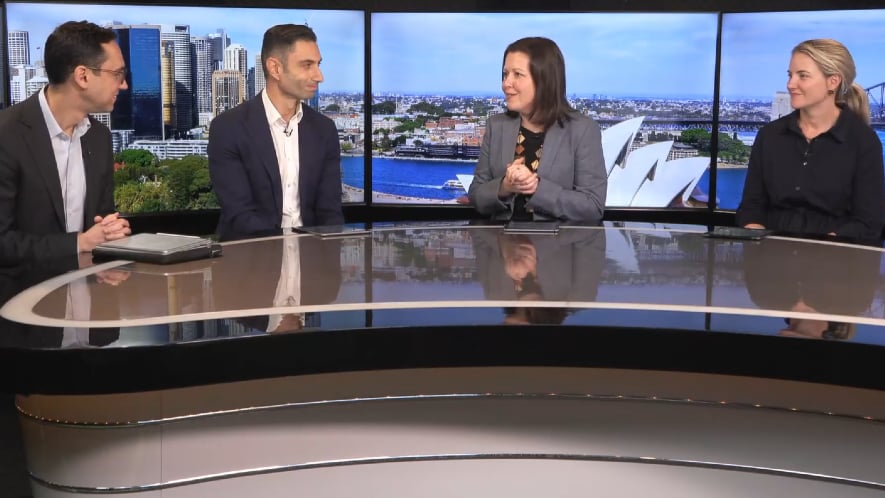









PwC’s June Tax Briefing examined the 2026–27 State and Territory Budgets, which reflect a cautious fiscal approach, balancing cost-of-living relief, ongoing service delivery, and infrastructure investment against rising debt and slower economic growth. With revenue growth moderating, governments have limited scope for significant reform or new spending initiatives. Hosted by Rachel Cullen, Partner, State Taxes, with insights from James Loughridge, Senior Economist, and contributions from Jess Fanton, Partner, State Taxes, Adam Nicholas, Partner, Employment Taxes, and Ari Esmerian, Partner, State Taxes, the panel examined the Budgets and their implications for fiscal settings, housing, and reform.
Balancing growth, debt, and risk
Budgets across jurisdictions were described as cautious but balanced. Operating results are expected to improve modestly, yet broader public sector balances remain in deficit. Net debt continues to rise, with refinancing risks most evident in Victoria, where daily interest costs are forecast to increase sharply as COVID‑era fixed debt matures into a higher‑rate environment. Queensland is aiming for a narrow path back to surplus by 2030, while New South Wales faces softer growth and significant exposure to housing market weakness. Western Australia remains comparatively resilient, supported by resources income and GST flows, whereas Tasmania is projected to become the most indebted state on a GSP‑weighted basis by 2029.
Infrastructure spending remains substantial but uneven. Victoria’s pipeline is expected to decline, Queensland has ambitious capital purchase targets, and New South Wales continues to plan projects averaging nearly $30 billion annually. Delivery capacity, however, is constrained by labour and cost pressures.
Housing at the centre
Housing emerged as the common theme across all Budgets. Duty concessions, grants, and relief measures were introduced or extended for first home buyers, downsizers, and build‑to‑rent projects. The Australian Capital Territory abolished duty for certain owner‑occupiers, South Australia targeted downsizers to free up larger homes, Tasmania confirmed its short‑stay levy, and New South Wales expanded surcharge duty relief to build‑to‑rent properties and retirement villages. Queensland also has a new foreign surcharge administrative exemption regime, which applies from 30 June 2026.
Beyond housing, incremental reforms continue. Victoria is progressing its transition to commercial and industrial property tax, coupled with commitments to reduce insurance duty, though balanced by new levies. The ACT remains on its long‑term path of reducing reliance on duty, offset by gradual increases in general rates. Vehicle registration duty adjustments have been introduced in the ACT and Northern Territory, while New South Wales has confirmed its electric vehicle road user surcharge despite constitutional challenges to similar schemes elsewhere.
Immediate support with deferred reform
The Budgets highlight the tension between short‑term cost‑of‑living relief and the need for long‑term reform. Short‑term measures provide support but do not address structural challenges, such as weak real income growth, housing affordability, and infrastructure bottlenecks. States remain heavily reliant on transaction taxes, payroll tax, and royalties, with GST reform still absent from the agenda.
Overall, the 2026–27 State and Territory Budgets are cautious but balanced. They provide sufficient support to households and businesses without triggering alarm, yet fall short of the reform needed to reshape medium-term fiscal sustainability. Governments continue to face three choices: cutting services, borrowing more, or reforming the tax base. For now, most have opted for incremental measures, leaving deeper structural reforms for another year.
Access this Tax Briefing on demand via the video link below.