









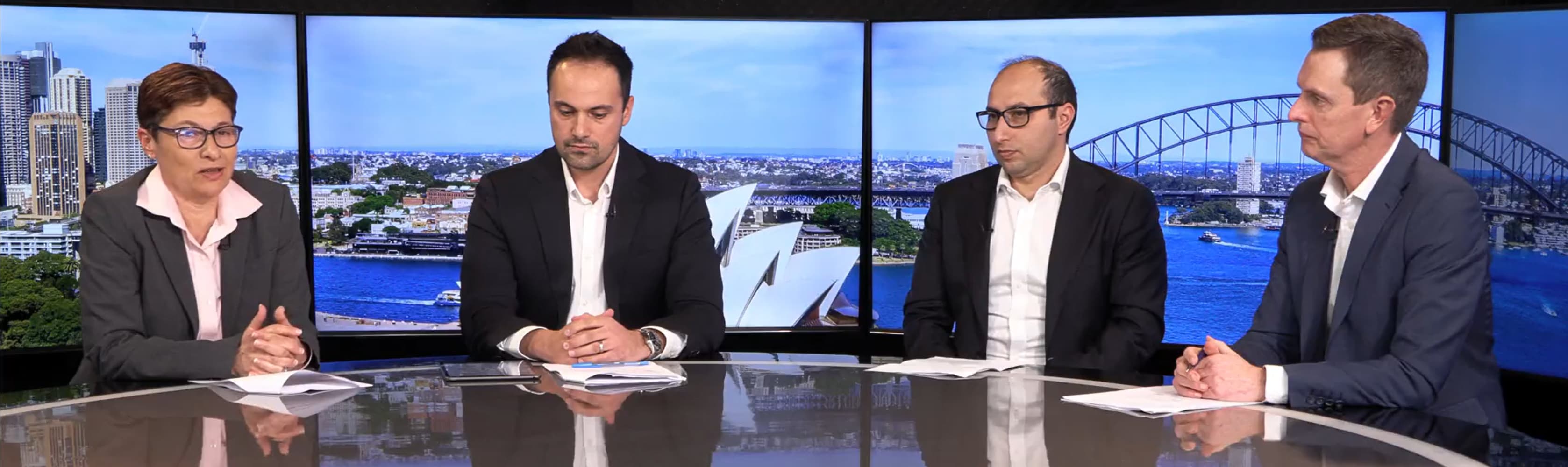
PwC’s July Tax Briefing examined how tax and regulatory developments are influencing investment decisions in Australia. Hosted by Joseph Sahyoun, a Partner in the Deals and Real Assets Tax Team, the session brought together Clara Cutajar, PwC Global Capital Projects and Infrastructure Leader, Luke Bugden, PwC Deals and Real Assets Tax Leader, and special guest panellist Meena Samaan, Managing Director at Stonepeak, a leading international alternative investment firm.
Tax reform reshaping investment considerations
Australia continues to attract global capital through its stable institutions, established legal and regulatory frameworks, and opportunities across infrastructure, resources, transport, renewable energy, and digital infrastructure. However, investors today have access to a broader global marketplace and are exercising greater selectivity when deciding where to invest their time and capital.
Recent tax developments are broadening the factors investors must evaluate when investing in Australia. Proposed changes to the foreign resident CGT rules, including a broader definition of ‘real property’, were identified as significant developments. While the removal of the proposed retrospective application was welcomed, investors remain focused on understanding how the new rules may affect investment returns and exit outcomes across a range of industries.
Thin capitalisation rules are also becoming increasingly important in transaction planning. Financing structures are now influenced by both commercial lending capacity and tax deductibility considerations, affecting bid pricing, funding models, and overall transaction economics.
Certainty increasingly influencing investment decisions
Certainty emerged as a central theme in the panel discussion. Investors can model measurable factors, such as tax, financing costs, and inflation, but uncertainty around planning approvals, grid connections, FIRB processes, and policy settings is harder to price. As a result, investment committees are giving greater weight to execution risk and investors are undertaking more diligence earlier in the deal cycle.
FIRB and the ATO are seeking more detailed information on transaction structures, financing, tax advice, and investment plans. Engagement with the FIRB and ATO can occur on entry, throughout the holding period and on eventual exit, making tax compliance, reporting, and regulator engagement ongoing operational considerations rather than matters addressed only during acquisition or sale.
Transaction structuring is becoming critical earlier in the investment process. Vehicle selection, debt capacity, stamp duty, cash repatriation, accounting considerations, and exit planning can affect bid pricing, financing flexibility, and investor returns. These matters now form part of the investment thesis and modelling from the outset.
Attractiveness supported by certainty and workability
Australia still remains attractive to private capital, but the underwriting bar has risen. Investors are placing greater weight on after-tax returns, regulatory certainty, financing capacity, and exit risk. For buyers, this means modelling tax and regulatory issues early. For sellers, it means preparing before going to market. Clear, predictable, and workable settings will be important to maintaining Australia’s competitiveness for long-dated capital, particularly in light of various Government policy objectives and initiatives.
Access this Tax Briefing on demand via the video link below.


