










AI Leadership Experience | Finance Leaders
Thank you for shaping what AI leadership looks like in practice.
As finance leaders, you face a unique balancing act: harnessing AI to drive greater insight and efficiency while maintaining trust, control and long-term value.
Over the past few weeks, we explored how AI can help achieve both, improving decision-making, increasing productivity, strengthening customer outcomes and creating capacity for growth.
This page brings together the perspectives you shared before the sessions, the insights that emerged from our discussions, and practical actions to help turn AI ambition into measurable business outcomes.

57% of your peers came into the programme confident in their AI strategy. Here's what we heard from the rest of the room and what it means for the journey ahead.
Before we began
Ahead of the sessions, we asked where your organisation is on its AI journey
By the end of the experience, participants gained a clearer view of where AI matters, what it means for their organisation, and the leadership choices required to move forward.
Four dimensions of value
Understanding value
The Fluency section examined why successful AI transformation depends on foundations more than just data and technology and access to new tools. Participants considered how organisations can prepare AI fluent leaders and employees, redesign work and roles, strengthen human skills and create the conditions for effective human–AI collaboration and change.
Key insights
The discussion reinforced that AI transformation starts with people. Sustainable value requires AI fluent leadership and workforce readiness, strong organisational foundations and a deliberate redesign of how work is performed.
Prepare people and leaders: Participants highlighted the need to build leadership AI fluency, assess workforce readiness and provide safe, targeted access to AI tools and learning environment.
Establish the right foundations: Effective governance, ethical frameworks, psychological safety and well-designed human–AI teaming were identified as essential enablers.
Redesign work: The experience demonstrated the importance of redesigning work around AI, understanding skills required, and updating workforce planning cycles and people systems.
Measure value, not just adoption: Participants were encouraged to focus the change journey on measurable impact, innovation and improved business outcomes rather than tool usage alone.

Finding value
The Strategy section focused on how organisations can develop a dynamic, value-led AI strategy that keeps pace with rapid technological change. Participants explored how to identify and prioritise AI value pools, translate high-potential opportunities into scalable initiatives, and align people, processes, technology and trust around measurable outcomes.
Key insights
The session reinforced that AI strategy must remain adaptable, make explicit choices about where to create value and provide a clear path from experimentation to enterprise-wide execution.
Respond to the new rules of competition: Participants considered how speed and innovation are reshaping competitive advantage, with trust amplifying an organisation’s ability to act.
Identify value pools: The discussion explored where AI can protect existing value, create new value and reshape business economics.
Make choices and move: Participants examined how to prioritise high-value opportunities and scale proven initiatives safely, rapidly and repeatedly.
Take an enterprise-wide view: AI was considered as an interconnected system spanning strategy, technology, data, operations, customers, governance and workforce capabilities.
Keep people at the centre: The experience emphasised the role of fluency and human capabilities in supporting adoption, collaboration and sustainable transformation.

Proving and scaling value
The Foundry section showed how organisations can translate AI ambition into measurable enterprise value. Participants explored how a shared operating model can connect data, technology, redesigned processes, human and agent responsibilities, governance and trust—enabling successful ideas to move from pilots into production.
Key insights
The experience demonstrated that AI does not scale as a collection of isolated projects. It scales as an enterprise system supported by reusable capabilities, clearly defined accountabilities and governance embedded from the outset.
Think systemically: Participants considered how a common enterprise operating model can connect AI initiatives instead of leaving them as standalone use cases.
Build for reuse: The session highlighted the value of creating shared data, business definitions, agent skills and technical capabilities that can be applied across multiple use cases.
Redesign workflows: Participants worked through the importance of reimagining processes around outcomes rather than simply adding AI to existing ways of working.
Clarify human–agent roles: The discussion reinforced the need to define ownership, autonomy, decision points and escalation pathways before agents are deployed.
Embed governance from the start: Participants explored how agents and models can be registered and monitored using appropriate risk tiers, guardrails, ownership and controls.
Scale towards reinvention: The session traced the progression from individual productivity gains to human–agent teams, autonomous workflows and new business models.

Safeguarding value
The Trust section examined how organisations can build confidence that AI is designed, deployed and governed responsibly, reliably and in line with business, customer and regulatory expectations. Through established standards, the AI Trust by Design approach, practical simulations and lifecycle governance, participants explored how strong governance can become an accelerator of safe AI adoption at scale.
Key insights
The discussion reinforced that trust must be designed into AI from the outset rather than added after deployment. Effective governance can build confidence among boards, regulators, customers and employees while helping organisations adopt and scale AI more safely and quickly.
Treat trust as an enabler: Participants considered governance not only as a risk control, but also as a way to accelerate confident adoption and innovation.
Build trust by design: The session highlighted the importance of embedding responsible AI principles, controls and accountability from initial planning through to decommissioning.
Use recognised frameworks: Participants reviewed how established guidance—including ISO/IEC 42001, the NIST AI Risk Management Framework and relevant regulatory principles—can support consistent governance.
Assess before deployment: The experience explored the need to define business requirements and assess data quality, bias, explainability, performance, sustainability and third-party risks.
Verify and validate: Participants considered the role of robust testing, stress testing, documentation, approval and attestation before AI systems go live.
Monitor continuously: The discussion emphasised ongoing oversight through monitoring, change logs, feedback mechanisms and incident-response plans.
Consider every perspective: Participants examined AI decisions through the lenses of customers, employees, regulators, boards, risk teams, technology leaders, the business and investors.

What's next
Tell us how the day landed for you
It helps us shape the next Experience and points our team to what would be most useful for yours
Contact us
Fluency
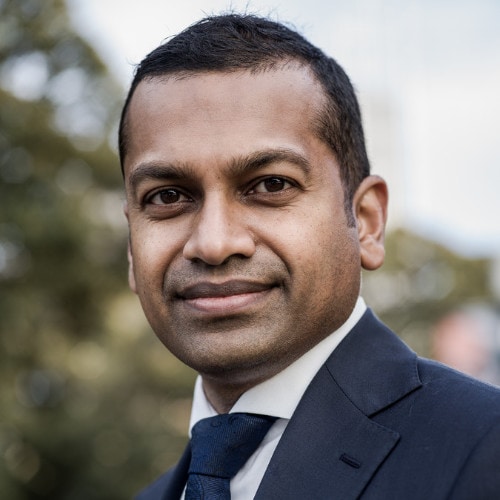
Dr Gayan Benedict
Partner, Advisory, MIT CISR Industry Research Fellow, PwC Australia

Alanah Hearn
Partner, Advisory,
PwC Australia.

Peter Wheeler
Managing Director, Advisory, Melbourne,
PwC Australia.
Strategy

Matthew Tutty
Partner, Strategy&, PwC Australia
Foundry

Sarwan Gul
Director, Data & AI,
PwC Australia

George Nixon
Senior Manager, PwC Australia
Trust

David Ma
Partner, Assurance, Digital and AI Trust,
PwC Australia

Nina Larkin
Partner, Risk and Regulation
PwC Australia


