









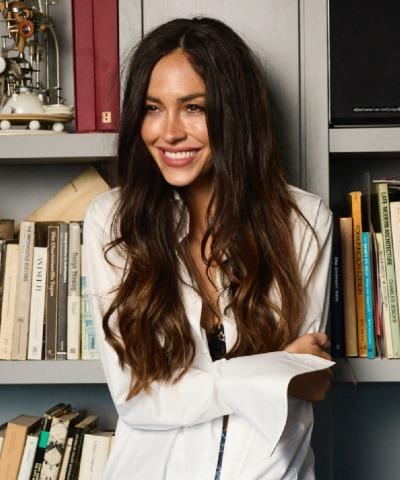
Full Name: Natalie Kyriacou OAM
Current Role: Non-Executive Director
Current Organisation: Care Australia, Foundation for National Parks & Wildlife, XPRIZE
Last Role at PwC: Environmental and Social Impact Advisor
Time at PwC: 2019 - 2023
What’s your fondest memory from your time at PwC?
The people. Being part of the Green Team. Working with people like Lucas Carmody and Lou Halliwell who made every day a joy, and who championed for the world with kindness, humility and a sense of humour.
How did your experience at PwC support or shape your career path? Are there any skills or lessons from your time at PwC that you still find valuable in the work you do today?
PwC was quite transformational for me. Working across multiple industries with an impressive range of clients helped me see how systems function as a whole. It sharpened my thinking, built my confidence, and gave me a front-row seat to the challenges that both industry and government wrestle with.
Most valuably to this chapter in my life, I learned how to better tell stories; how to translate complex environmental issues into language that resonates with different audiences.
And of course, I became fluent in consulting-speak, something that I thankfully have unlearned since writing my book.
You recently launched your first book, ‘Nature's Last Dance’. What inspired you to author this book, and what do you hope readers will take away from it?
Simply, because I care. Nature is our joy, our wonder, and our lifeline. It is the source of our stories and symbols, our art and ingenuity. It fuels our health, feeds our bodies and builds our homes. It inspires technology, births medicine, and builds empires.
I see people disengaging from environmental issues. I see division. I see many viewing our environmental challenges as too big, too broken to fix. Or, worse, as not relevant to their lives. I wanted to blend humour, joy, tragedy, and inspiration to tell the story of humanity and nature in a way that can (hopefully) cross political and social divides and appeal to a diversity of people.
I also wanted this book to reach people who might never pick up a nature book. I wanted to make the case for nature to everyone, not just those already invested in environmental issues. I wanted to show that (beyond survival) our lives, economies, identities, and societies are inextricably tied to nature.
I truly believe there is a story in this book for anybody and everyone - something to make people laugh, feel, cry, and learn. And, if there is one thing that I hope readers will take away it is that everyone is a nature advocate, they just don’t know it yet.
Here is the link to Nature’s Last Dance: Tales of Wonder in an Age of Extinction..
You've built your career around environmental conservation and social impact. What inspired you to focus on these issues?
Humanity is the only species that actively debates whether or not it should maintain the environmental conditions necessary for its own continued existence. Other species do not struggle with this sort of thing. I am of the opinion that ensuring the existence (and health) of life on this planet is a reasonably worthwhile pursuit. After all, the environment is the thing that allows us to breathe. Without the environment, we don’t have anything. No schools, hospitals, football fields, or homes. We are nothing without nature. So advocating to protect the very thing that keeps us alive seemed like a good place to direct my energy.
How do you think about the Board’s role in impacting the community around them?
The Board plays a critical role in shaping how an organisation impacts the community around it, particularly when it comes to environmental stewardship. At its core, this responsibility is about setting direction, ensuring accountability, and embedding long-term thinking into decision-making.
Boards can guide investment and strategy away from activities that harm nature and communities, and toward initiatives that restore ecosystems, reduce emissions, and build resilience.
They can strengthen accountability by linking environmental performance to executive remuneration, ensuring transparent reporting, and holding management to measurable outcomes.
Ultimately, Boards set the tone for whether an organisation harms or supports communities and nature.
You achieved an OAM for your environmental work before you were 30 years old. And you were recently named a 2025 Marie Claire 'Women Of The Year' nominee in the 'Eco-warrior' category. What do these accolades mean to you?
My entire career and life’s purpose is focused on pushing for greater environmental and social equity impact. I believe I have a moral obligation to do so.
These accolades are, of course, a huge honour. And I’ve also found them useful for winning arguments at family gatherings.
But, obviously, they’re not the reason I do the work. What they have done, I believe, is given me a stronger platform to champion the causes I care deeply about.
At the end of the day, my goal is pretty simple: to live a life that creates more good than harm. If an award nudges open a few more doors, lends weight to important conversations, or helps me advocate more effectively for nature and communities, then I’ll gladly accept it. But I think it goes without saying (though I’ll say it anyway) that the work will always matter more than the recognition. If I ever start caring more about the shiny thing than the actual impact, then things have gone spectacularly wrong.
You pursued a Master's scholarship in Security, Gender and Development in South Asia at Delhi University. How has that experience influenced your perspective or the way you approach your work now?
This was part of my Masters in International Relations, and it certainly shaped my perspective of the world. This degree helped me better understand forces shaping environmental destruction. The systems and power dynamics that determined which voices were heard and which were silenced. The structures that decided who thrived and who paid the price for that prosperity. The policies that dictated whether a forest stood or fell, whether a species survived or vanished, whether a community flourished or was forgotten. I wanted to understand why we built systems that made it easier to destroy a forest than to protect one, why the very thing that sustained life (nature) was often treated as expendable, and why it was the most vulnerable communities that bore the heaviest burden of environmental destruction.
Today, that perspective informs everything I do. I look at environmental challenges not as isolated problems but as outcomes (or symptoms) of interlinked systems. And I work to push for solutions that address the root causes, rather than treating the symptoms of the problem.
What advice would you give to professionals who aspire to make a positive impact in the world, as you have?
Start where you are, use what you have, and stop waiting for permission.
Too often, we tell ourselves that doing the right thing is hard. That doing the right thing will have to wait until later. But it is not hard. It’s the easiest thing in the world to be kind, to be curious, to walk gently in the world, to speak up in the face of injustice. So start there.
What’s your favourite festive tradition and why?
On Christmas, my family (mostly comprised of fully grown adults) turns my parents’ property into a makeshift outdoor arena and then we split into teams and compete in gladiator-style games. It is very embarrassing and I adore it.
Are you a member of our PwC Australia Alumni LinkedIn group? Join here and connect with PwC and your fellow alumni, get real-time updates, participate in meaningful discussions, and expand your professional network.


